Product Designs and Development
ISTS-2015-f-35
Lifetime Test of a Cold Gas Thruster
30th International Symposium on Space Technology and Science · Kobe, Japan · July 2015
Hans-Peter Harmann, Heiko Dartsch
2016
Cold Gas Thruster
Lifetime Testing
Qualification
Abstract
A 47 mN cold gas thruster developed by AST for the FORMOSAT 5 mission demonstrated over one billion actuations at 100 Hz pulse rates, validating the exceptional long-term reliability of the solenoid valve-based design.
1. Introduction
FORMOSAT 5 is a small LEO earth-observation satellite of 525 kg mass, designed and developed by the Taiwanese Space Organization NSPO, providing panchromatic imaging from a sun-synchronous orbit at 720 km altitude on a five-year mission planned to launch on a Falcon 9 rocket in 2016. The satellite is controlled by four cold gas thrusters (CGT) with 47 mN thrust each at 1.5 bar(abs), designed, developed and manufactured by AST Advanced Space Technologies GmbH. A special feature of this thruster type is the high number of lifetime actuations, already demonstrated on valve component level during the development of a xenon flow control unit; a dedicated lifetime test campaign was conducted for the CGT development, with a second campaign ongoing as part of an extended thruster qualification program.
2. Cold Gas Thruster Design
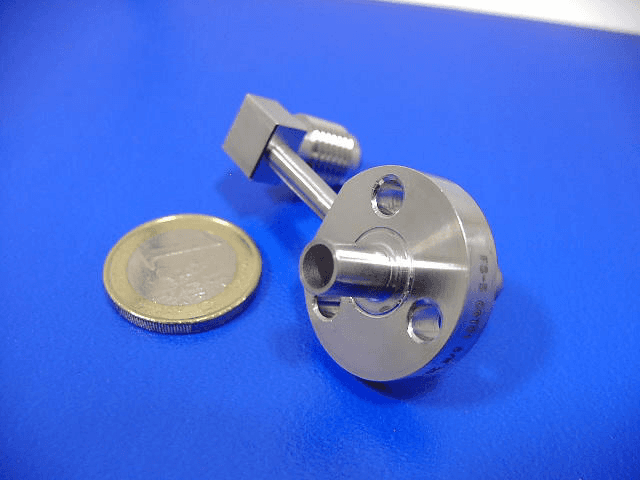
The CGT consists of the solenoid valve, a nozzle, a mechanical interface plate and the fluidic interface, in a modular configuration allowing the nozzle diameter or fluidic interface to be changed without modifying other parts. Key figures: mass 43 grams, nominal thrust 47 mN at 1.5 bar N2, specific impulse > 69 s, switch-on time < 1 ms, operating voltage range (pull-in) 22 to 36 V, resistance 140 Ohm, minimum power (pull-in/hold) 3.5 W / 0.1 W (typically 0.25 W), temperature range -25°C to +60°C.
4. Development Tests (Accelerated Lifetime Test)
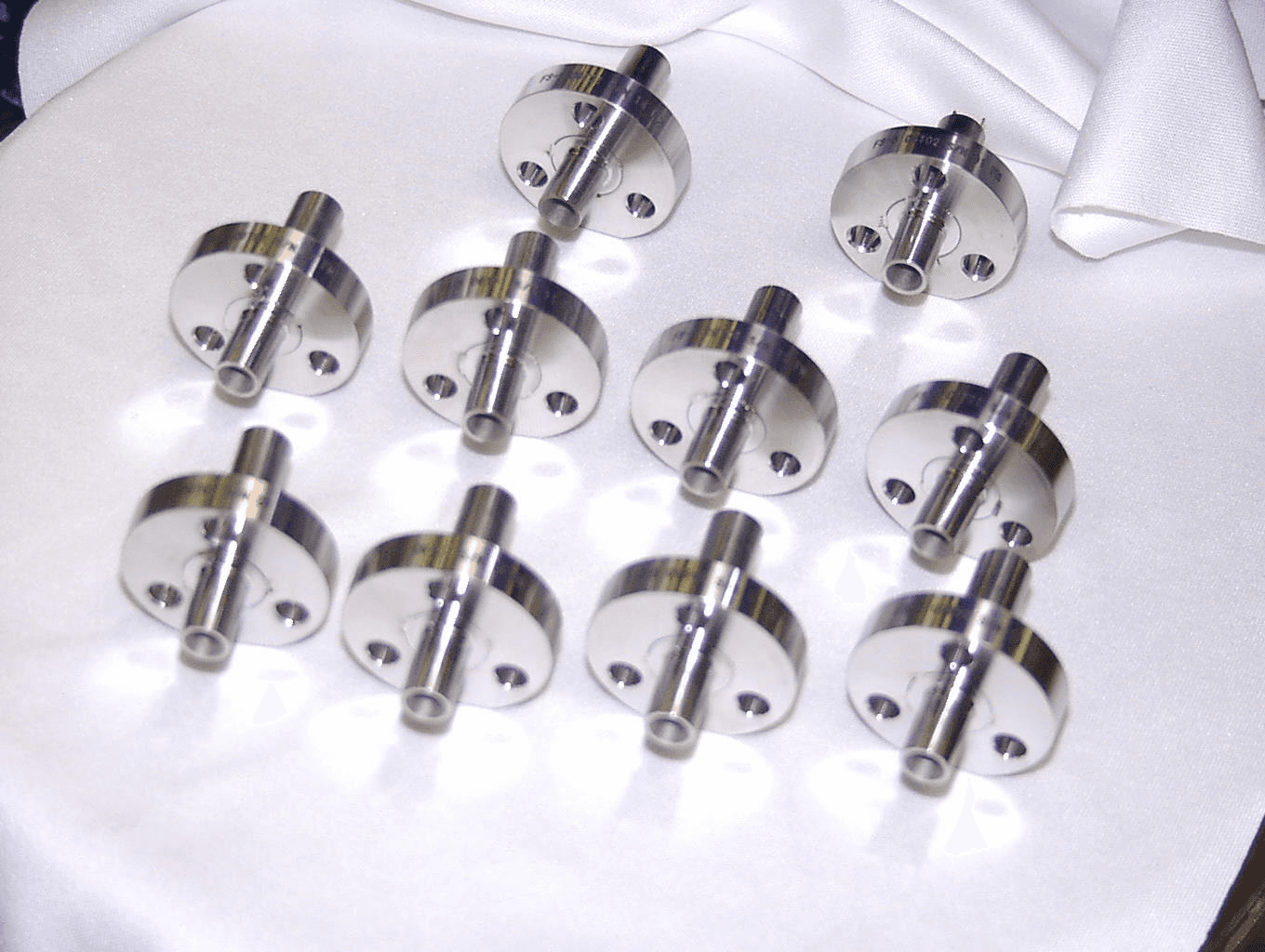
An accelerated lifetime test campaign was conducted on an engineering model (EM) identical to the later flight models but from a first pre-series production batch, connected to a pressurized nitrogen gas supply under ambient lab conditions, with a pressure sensor and flow meter monitoring propellant flow. Since the switching transient of the valve introduces the major stress and wear on mechanics and seal elastomer, the AST CGT (able to open within less than a millisecond and close within 2 milliseconds) was operated at 100 Hz with 50% duty factor, allowing more than eight million cycles per day. The total campaign operated the valve for one billion cycles without gas flow and 100 million cycles with nominal gas flow, consuming more than 30 kg of nitrogen over a half-year test campaign, with each working day’s cycling interrupted for measurement at 2.5 bar(abs) inlet pressure.
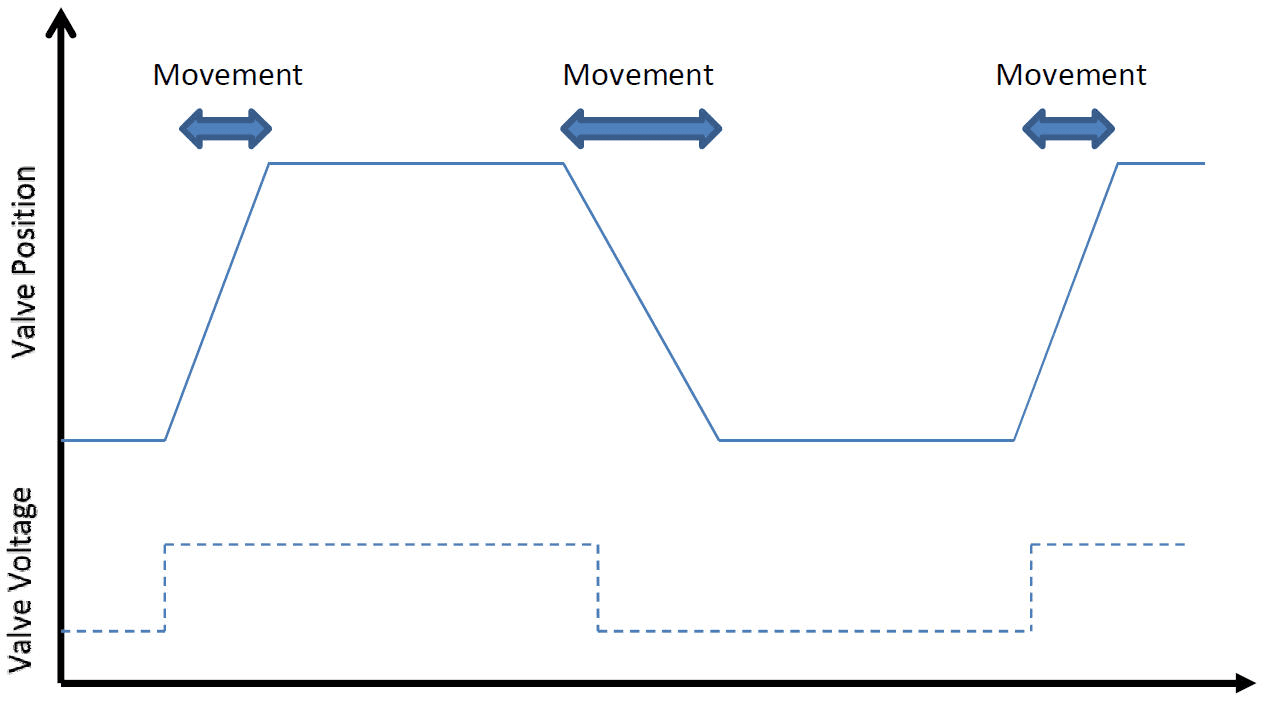

During the first 250 million cycles a slight 3% increase in full flow was determined, correlating with former component-level lifetime measurements and attributed to elastomer settling; the following 500 million cycles showed the flow level staying constant, with a very slight decline tendency after a total of 700 million actuations. Mass flow variations for all working points remained within 3% of starting conditions over the full test time, and the thruster remained functional after the campaign before being placed into a long-term storage test.
5. Qualification (QM)
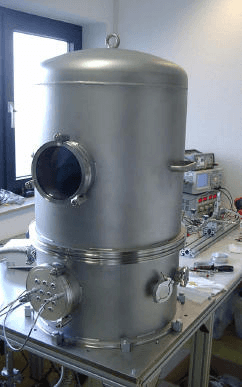
Thruster qualification for FORMOSAT 5 was performed as a combined acceptance and qualification test campaign with six flight-model (FM) thrusters tested in parallel by SpaceTech GmbH Immenstaad (STI); one CGT was applied to extended qualification test levels, and after all qualification tests (functional, pressure proof, vibration, thermal vacuum) the qualification model (QM) was sent to AST for lifetime testing in AST’s vacuum test facility to provide representative operational conditions, especially with respect to gas flow dynamics.
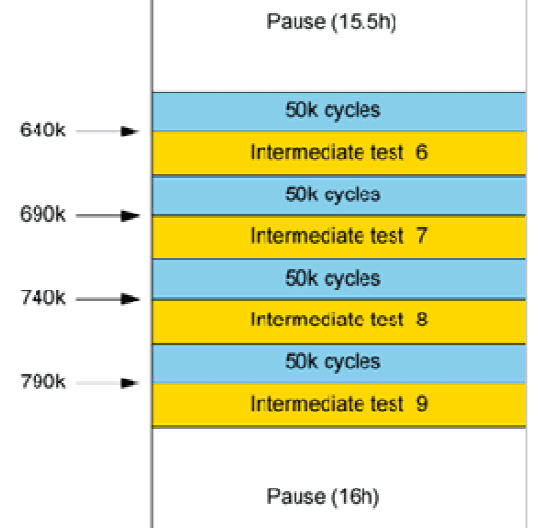
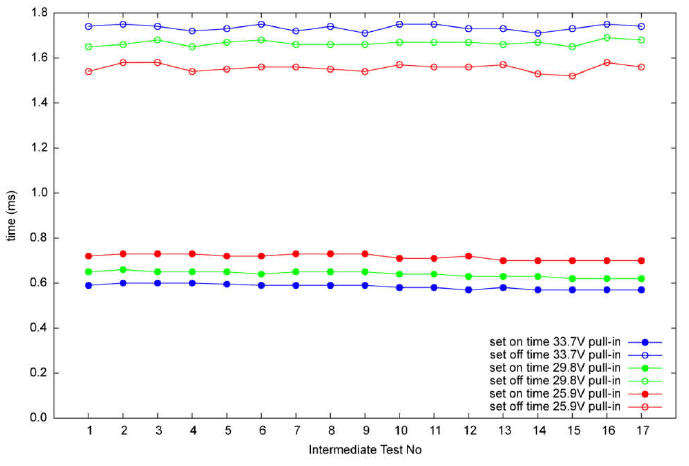
During qualification at STI the QM accumulated 340 thousand actuations; total lifetime verification required demonstrating 1.5 million cycles including a 50% margin. The resulting 1.2 million cycles were split into 18 test blocks (initially 50K cycles, later increased to 100K cycles) at a pulse frequency of 15.4 Hz, with the thruster shut down about 16 hours daily to simulate non-operation. Between each test block, coil resistance, set-on time, set-off time, mass flow and helium leakage rate at 1.5 bar GHe were measured to monitor changes in the valve’s internal mechanics or magnetic circuit.
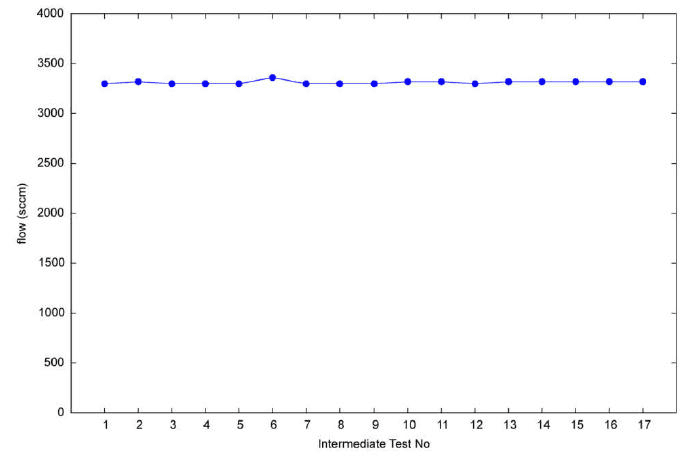
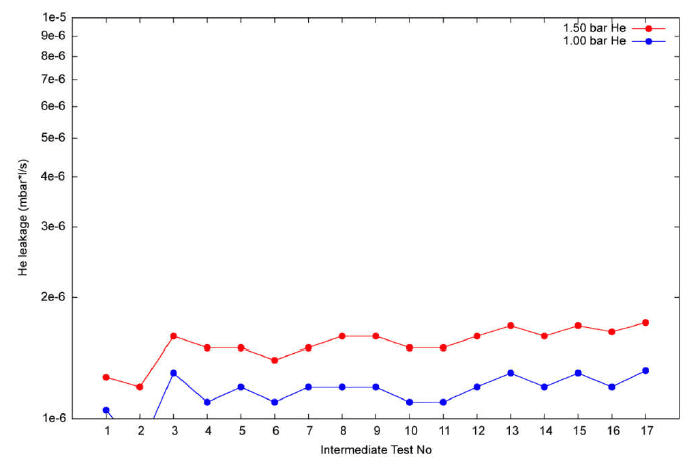
Results: coil resistance of 138 Ohm stayed constant over the full campaign; set-on/set-off switch times did not change within measurement accuracy, indicating unchanged internal valve conditions; measured mass flow at 1.5 bar(abs) remained unchanged with an average value of 3320 sccm nitrogen; and helium leakage showed a slight trend to higher rates over lifetime, but far below the requirement of 2×10⁻⁵ mbar l/s, consistent with elastomer settling and run-in effects. HV insulation testing at 500V and minimum open/hold voltage measurements (8V and 2.2V respectively) showed no changes before and after the cycling test.
6. Outlook
After the lifetime cycling test, the QM was put into a long-term storage test; after one year of storage the thruster is to be remounted inside the vacuum chamber to continue cycling in an extended lifetime campaign. The huge number of lifetime cycles and capability for short pulse times open the floor to pulse-modulated cold gas propulsion for new mission scenarios with dynamic and precise attitude control, a system concept under investigation in cooperation with SpaceTech GmbH Immenstaad.
5. Summary and Conclusion
The AST CGT demonstrated an outstanding lifetime capability of more than one billion actuation cycles on an engineering model. In a formal space qualification program, the thruster has been qualified for 1.5 million cycles (including 50% margin), state-of-the-art for today’s mission scenarios.
Paper No.
ISTS-2015-f-35
Published
2016
Conference
30th International Symposium on Space Technology and Science · Kobe, Japan · July 2015
Authors
Hans-Peter Harmann, Heiko Dartsch
Keywords
cold gas propulsion, thruster, FORMOSAT 5, qualification, lifetime test